Abstract
In response to the prevalent issues of one-dimensional teaching evaluation, delayed performance feedback, and a notable disconnect between academic instruction and industrial requirements in higher education, this study proposes and validates a diversified intelligent evaluation system. The system is constructed by integrating the CDIO (Conceive-Design-Implement-Operate) engineering education framework with the principles of emotional education, operationalized within the XuetangX online learning platform. The proposed evaluation model encompasses three core dimensions: knowledge acquisition, practical competency, and emotional literacy, aiming to provide a holistic assessment of student development. The effectiveness of this system was empirically tested through a semester-long case study implementation in the "New Media Marketing" course at Beijing Union University. The research findings demonstrate that the system effectively captures multidimensional student performance. Specifically, it accurately diagnosed students' conceptual mastery through AI-assisted quizzes, generated detailed competency profiles that highlighted strengths and weaknesses in operational, technical, and managerial skills, and successfully tracked observable emotional growth indicators such as curiosity, persistence, and self-confidence. The results indicate a balanced improvement across competency indicators and a positive trend in emotional outcomes, validating the system's capacity to support comprehensive formative assessment. However, the study also revealed a significant challenge: despite the availability of AI tools, over two-thirds of the students demonstrated low engagement, suggesting that the presence of technological resources alone does not guarantee active utilization. This underscores the need for future iterations to incorporate participation incentives to enhance student involvement. Overall, this research provides a practical and theoretical reference for reforming evaluation systems in industry-education integrated courses. It demonstrates that an intelligent, data-driven approach encompassing cognitive, skill-based, and affective domains can offer richer, more actionable feedback, thereby fostering improved teaching practices and student learning outcomes in digitally enhanced educational environments.
|
Published in
|
Education Journal (Volume 15, Issue 4)
|
|
DOI
|
10.11648/j.edu.20261504.16
|
|
Page(s)
|
179-185 |
|
Creative Commons
|

This is an Open Access article, distributed under the terms of the Creative Commons Attribution 4.0 International License (http://creativecommons.org/licenses/by/4.0/), which permits unrestricted use, distribution and reproduction in any medium or format, provided the original work is properly cited.
|
|
Copyright
|
Copyright © The Author(s), 2026. Published by Science Publishing Group
|
Keywords
Ta-driven, Intelligent Evaluation, CDIO, Emotional Education, Integration of Industry and Education
1. Introduction
The field of education is being transformed by artificial intelligence. Intelligent teaching platforms have allowed gathering huge volumes of student learning behavior data allowing them to create a well-developed student assessment system. There is a hot spot in research on how to utilize this data to perform comprehensive assessments of the students. The AI-driven learning analysis and adaptive platform significantly enhances teaching efficiency and provides data support for personalized learning
| [1] | Zhu Daoheng, Feng Tianxin, Wen Jinfang. Exploration of AI-Driven Teaching Reform and Diversified Evaluation Education Model in Colleges and Universities [J]. Industrial Innovation Research, 2026, (10): 157-159. |
[1]
; meanwhile, the application of intelligent technologies is reshaping the paradigm of higher education teaching evaluation by establishing more process-oriented and systematic assessment mechanisms
| [2] | Li Jianlong, Niu Zhendong. Exploration of Practical Mechanisms for Deep Integration of Artificial Intelligence into University Teaching Evaluation [J]. China Higher Education, 2026, (Z1): 76-80. |
[2]
.
At present, the assessment of university classroom teaching is based mainly upon end-of-term exams and course papers, which have the following drawbacks: Firstly, the evaluation is focused on student memory of knowledge with inadequate consideration of their capability to use acquired knowledge in solving practical issues, and does not evaluate emotional factors like teamwork spirit and professional awareness
. Secondly, the feedback of evaluations is delayed as students get a score or grade rating at the end of a semester, which cannot immediately reveal the current issues in classroom teaching to be addressed
| [4] | Qu F, Yuan J F, Xie B F. The practical problems and reform countermeasures of teaching evaluation in higher vocational colleges under the digital intelligence environment [J]. Education Research and Innovation, 2026, 2(3). |
[4]
. Thirdly, the industry-based standards used when evaluating the level of completion and implementation of the projects carried out by enterprises and implemented in school as part of the industry-education integration courses are not incorporated into the evaluation criteria, and this results in a disconnect between the classroom teaching and social needs
| [5] | He J. Construction and Practice of Innovation and Entrepreneurship Education Model in Higher Vocational Education Based on CDIO Concept ——A Case Study of Shaanxi Energy Institute [J]. Educational Innovation Research, 2025, 3(4): 136-142. https://doi.org/10.18063/EIR.V3I4.1012 |
[5]
. This challenge is particularly salient in applied disciplines, where the gap between classroom instruction and real-world practice remains a persistent issue
. This traditional evaluation model has been widely criticized for its singular focus on knowledge assessment, delayed feedback, and insufficient data support
| [7] | Bao Wanping, Wang Xiaofan, Yu Meijuan. Issues and Optimization Approaches in Using Artificial Intelligence to Enhance Classroom Teaching Evaluation in Primary and Secondary Schools [J]. Journal of Beijing Institute of Education, 2026, 40(2): 16–21.
https://doi.org/10.16398/j.cnki.jbjieISSN1008-228x.2026.02.003 |
[7]
.
To overcome these challenges, this paper will use theXuetang Online platform to build a diversified intelligent evaluation model based on data. The course design concept is the CDIO engineering education philosophy and the project organization process is Conceive-Design-Implement-Operate. Also, it incorporates emotional education concepts, where the emotions experienced by students in the learning process are grouped into five observable factors. The effectiveness of this approach is determined through different learning measures that have been taken on the platform in the form of students capability profiles and emotional experience tracking in such examples as the New Media Marketing course at the Beijing Union University.The construction of this evaluation framework is grounded in the recognition that intelligent technologies, when properly integrated, can serve not merely as administrative tools but as developmental engines that drive instructional improvement and student growth
| [2] | Li Jianlong, Niu Zhendong. Exploration of Practical Mechanisms for Deep Integration of Artificial Intelligence into University Teaching Evaluation [J]. China Higher Education, 2026, (Z1): 76-80. |
[2]
.
2. Construction of a Data-Driven Diversified Intelligent Evaluation System
2.1. Theoretical Foundation
2.1.1. The CDIO Model and Competency Assessment
CDIO approach includes conception, design, implementation, and operation, which is the combination of the whole engineering process into teaching to enhance the ability of students to solve engineering problems and learn practical engineering skills when working on real-life projects
| [5] | He J. Construction and Practice of Innovation and Entrepreneurship Education Model in Higher Vocational Education Based on CDIO Concept ——A Case Study of Shaanxi Energy Institute [J]. Educational Innovation Research, 2025, 3(4): 136-142. https://doi.org/10.18063/EIR.V3I4.1012 |
[5]
The New Media Marketing course requires that each student group works on a company-specific project, with conception as market research and user profiling, designing as coming up with a marketing plan, implementing as making promotional material, and operating as monitoring the conversion performance and reflection. CDIO model offers the structure to arrange the courses based on the project-based learning.The CDIO model has been increasingly adopted in business and marketing education, as its project-based cycle of conception, design, implementation, and operation provides a structured pathway for bridging theoretical knowledge with practical competencies
. Combining CDIO with the outcome-based education framework delivers remarkable results in cultivating students' data-driven thinking and problem-solving capabilities
| [8] | Huang Xiaoru. Exploration of interdisciplinary teaching reform for the Econometrics course integrating OBE-CDIO under the digital-intelligentization context [J]. China Electronic Business Information, 2026, 32(11): 100-102. |
[8]
.
2.1.2. Emotional Education
The focus of emotional education is on developing the wide range of emotional aspects of students such as their attitudes, values and interest in learning. Though literacy consists of three areas namely cognitive skills, practical skills and emotional growth, the feeling element has received less attention in the conventional assessment models because it is difficult to assess and subtle
| [9] | Dang Zhiping. Construction of a school-based emotional education model oriented toward holistic life development in the era of artificial intelligence [J]. Teaching and Management, 2025(27): 63–68. |
[9]
. Emotions like curiosity, thirst to learn, and sense of accomplishment are very important in student learning in a digital learning setting
| [10] | Jiang Huifang, Zeng Wenjie. Generative AI drives the transformation of educational evaluation [J]. China Journal of Education, 2025(8): 41-48. |
[10]
. The cultivation of social and emotional competencies—such as self-regulation, empathy, and collaborative skills—has been identified as a critical dimension of higher education, particularly in the context of preparing students for complex social interactions and value-based decision-making in their future careers
| [11] | Li Guanghong, Liu Fucai. Empowering the Cultivation of College Students' Social and Emotional Competence with Artificial Intelligence in the Context of New Liberal Arts Construction: Value, Challenges and Pathways [J]. Journal of Jinan University (Social Science Edition), 2026, 36(3): 158-165.
https://doi.org/10.20004/j.cnki.ujn.2026.03.016 |
[11]
. Thus, the research analyzes the concept of emotion as a separate dimension and breaks it down into observable student actions using the five-step model of emotional education, and compares it with the other two dimensions.
2.2. The Construction of an Evaluation System
Taking into account the requirements of organizing students entire project process using the CDIO model, the necessity of evaluating the emotional experience of students in the context of learning based on affective education theory, and the importance of assessing corporate performance in the integration of industry and education, this paper suggests an assessment framework that involves knowledge, competencies, and affective aspects. The specific assessment indicators, information sources and their corresponding weights in each dimension are given in
Table 1. The results of the final evaluation will be sent to the teachers in the form of student growth portfolios and affective experience report to help them shape their subsequent teaching practices and support the students in the reflection of their learning development. All of the relevant work was done on XuetangX.
The design of this multidimensional framework is informed by the principle that intelligent evaluation systems should integrate multi-source data, including behavioral, cognitive, and affective indicators, to generate a comprehensive picture of student development, rather than relying on isolated performance metrics
| [8] | Huang Xiaoru. Exploration of interdisciplinary teaching reform for the Econometrics course integrating OBE-CDIO under the digital-intelligentization context [J]. China Electronic Business Information, 2026, 32(11): 100-102. |
[8].
In this regard, a key advantage of AI-enabled platforms lies in their capacity to collect and synthesize various types of learning process data, thereby supporting both formative and summative assessment functions
| [1] | Zhu Daoheng, Feng Tianxin, Wen Jinfang. Exploration of AI-Driven Teaching Reform and Diversified Evaluation Education Model in Colleges and Universities [J]. Industrial Innovation Research, 2026, (10): 157-159. |
[1]
Table 1. 3D Evaluation Design Form.
Dimension | weight | evaluating indicator | data sources |
Knowledge Dimension | 30% | Test scores, accuracy of conceptual understanding, and proper use of AI tools | Online quizzes on the platform, knowledge graph diagnosis |
Ability Dimension | 40% | Operational capabilities, technical capabilities, management capabilities | Platform Capability Assessment Engine (Student Competency Profile) |
Emotional Literacy Dimension | 30% | Curiosity-driven motivation, insatiable thirst for knowledge, determination to overcome challenges, strong desire for practical application, and unwavering confidence in mastery. | Classroom Observation Records |
2.3. Evaluation Path
2.3.1. Knowledge Dimension
This assessment evaluates students' comprehension and application of key concepts covered in the course. Data are derived from online quiz scores on the XuetangX platform and knowledge graph diagnostic results. The online quizzes encompass marketing-related knowledge, AI tool applications, and data analysis methods; scores are automatically generated with error statistics provided. Knowledge graph diagnostics identify conceptual misunderstandings by marking corresponding positions within the graph. The logical validity evaluation is also performed using artificial intelligence, applying predefined scoring criteria.Research on AI-assisted classroom evaluation has shown that the combination of external knowledge bases and pre-defined evaluation frameworks can effectively improve the accuracy of automated assessments and the specificity of feedback, particularly in identifying conceptual misunderstandings and logical gaps in student work
| [12] | Zhao Wenjun, Zhou Xingyu, Cao Yiming, et al. An intelligent evaluation system for mathematics classroom instruction improvement: Framework development and performance assessment [J/OL]. Journal of Mathematics Education, 1–7 [2026-07-12]. https://link.cnki.netUrlid/12.1194.G4.20260702.1454.006 |
[12]
.
2.3.2. Ability Dimension
Competency assessment system offered by the XuetangX platform measures students in three major areas, which are as follows: operational skills (market analysis, user segmentation, content planning, and data analysis); technical proficiency (the use of AI technologies to write, produce videos and interpret results); and management abilities (sharing tasks among team members, managing time, and communicating effectively). The platform produces a detailed competency profile of every student through assessing each stage of the project workflow, end products and peer reviews. The three assessments are all embedded into the whole learning process.This approach aligns with the broader trend of leveraging multimodal learning analytics to capture student competence development. Recent studies have employed classroom audio, video, and behavioral data to generate comprehensive teaching portfolios that support both teacher reflection and student self-assessment
| [13] | Qin Mingcan, Hao Xiaohong, Zhao Yinan, et al. Exploring Digital Technologies to Enhance Teaching Evaluation Models for University Faculty [J]. Theory and Practice of Innovation and Entrepreneurship, 2026, 9(8): 20–22. |
[13]
.
2.3.3. Emotional Literacy Dimension
According to the five stages of emotional development model in the affective education theory, the stages are identified as follows: curiosity (student interest in course material and project work), thirst of knowledge (yearning to actively acquire new knowledge and resources), readiness to surmount obstacles (persistence and initiative in solving problems) hands-on motivation (inclination towards implementing ideas in practice), and sense of achievement (evaluation of oneself upon the completion of a project). Classroom observation records were used as the source of the data since the performance of students was evaluated at the end of every activity to assess the trend of the emotional development of each student. which were measured at the beginning, middle, and end of the course using a five-point Likert scale to capture the trajectory of students' emotional development. This five-stage framework is grounded in the understanding that emotional literacy, while inherently internal and context-dependent, can be made observable through carefully designed behavioral indicators aligned with specific learning activities
| [11] | Li Guanghong, Liu Fucai. Empowering the Cultivation of College Students' Social and Emotional Competence with Artificial Intelligence in the Context of New Liberal Arts Construction: Value, Challenges and Pathways [J]. Journal of Jinan University (Social Science Edition), 2026, 36(3): 158-165.
https://doi.org/10.20004/j.cnki.ujn.2026.03.016 |
[11]
. Such an approach helps address the long-standing challenge of assessing non-cognitive outcomes in higher education
| [10] | Jiang Huifang, Zeng Wenjie. Generative AI drives the transformation of educational evaluation [J]. China Journal of Education, 2025(8): 41-48. |
[10]
.The teaching diaries contained the observation records, and a summary of the final observations is presented in
Table 2:
Table 2. Five-stage classroom observation behavioral indicators for the dimension of emotional literacy.
Emotional Indicator | weight |
Curiosity stimulation | Ask questions proactively, focus on the teaching materials, and show interest in the project. |
hungry for knowledge | Proactively consult supplementary materials, inquire about technical details, and try new features |
Emotional Literacy | When faced with challenges, do not give up; try multiple solutions; and continue attempting after seeking help proactively. |
Practical Impulse | Take the initiative to operate manually and start trying new tools without waiting for instructions |
Master with confidence | Proactively showcase your achievements, help your peers, and express satisfaction with your work |
3. Research Process and Methods
3.1. Research Design
This study takes the "New Media Marketing" course at Beijing Union University as a case study to evaluate the application of the established three-dimensional evaluation system.
3.2. Object of Study
The first-year students in the E-commerce program at the College of Applied Science and Technology, Beijing Union University, came from two groups with nearly identical entrance exam scores and prior academic backgrounds.
3.3. Implementation Process
It is a course of 16 weeks that follows the CDIO project-based learning method. There are three elements of assessment.
1) Pre-class stage: The school and the enterprise choose an actual project in the enterprise and determine whether it is relevant to the learning goals of the course. Course materials based on these are created on XuetangX (instructional videos, AI tool use guide, online test question bank, etc.) and students are told about the three-dimensional evaluation system and the criteria of scoring. It also makes sure that teachers know the five observation points related to the emotional literacy dimension and keeps detailed observation records in class.
2) In-class elements are: The teaching of project-based learning is implemented in four steps of CDIO, and the large amount of data is gathered via the online system. The pedagogical design followed the "BOPPPS-theory-led and CDIO-practice-driven" integration model, which has been shown to effectively enhance both knowledge acquisition and practical competence in project-based courses
| [14] | Chai Zixia. Theoretical Framework and Practical Research on the Integrated BOPPPS and CDIO Teaching Model under the New Liberal Arts Initiative [J]. Science, Education and Culture Digest, 2026, (9): 32–35.
https://doi.org/10.16871/j.cnki.kjwh.2026.09.007 |
[14]
. Conceptualisation and Design Stage: Market research, user profile creation and development of marketing proposals are carried out by students and the platform measures the learning progress data, but the AI system will assess the online test score and proposal feasibility, and corporate mentors will grade interim proposals and give initial marks. Implementation and Operation Stage: Students create promotion materials, track project conversion rates, and present summary reports; corporate mentors provide ultimate ratings depending on the conversion rates and innovation abilities; the competence evaluation engine of the platform produces personal ability profiles of each student. Each time a classroom class or presentation takes place, teachers rate their student performance by five standards and emotions accordingly.
3) Post-class period: Corporate mentors and instructors review the projects to assess the success rate and business adoption of the projects. Students reflect on their competency profiles and record their learning reflections. Teachers record classroom observations, examine overall emotions in the class, and make suggestions on how to improve teaching during the subsequent phase.
3.4. Data Sources and Collection
The information was derived through XuetangX platform (course: New Media Marketing) and teachers observation records in the classroom (learning behavior measures (the amount of logins, resources accessed, number of exercises performed, number of posts made, etc.), competency indicators (scores of operational, technical and managerial capability measured by the assessment engine of the platform with relevant profiles) and emotional observation data (grades assigned by teachers to student performance in the classroom on the basis of five-dimensional behavioral metrics)). Descriptive statistical analysis of such metric values was performed to determine the effectiveness of the overall assessment framework.
4. Results
The three-dimensional evaluation system proposed in this study has demonstrated positive outcomes across all aspects when implemented in the "New Media Marketing" course.
4.1. Knowledge Dimension
The AI-based online quizzes and knowledge graph analysis accurately identified common difficulties students faced with key content, enabling teachers to provide targeted guidance. Both the average score rate of online quizzes and the knowledge graph coverage rate reported by the platform meet the required standards.
4.2. Ability Dimension
As shown in
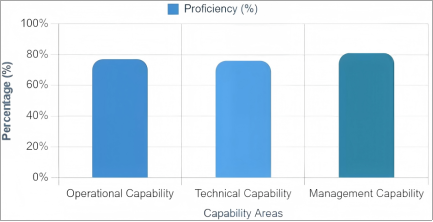
Figure 1, the competency profiles generated by the assessment engine reveal that students' operational competence, technical competence, and management competence scores are 77%, 76%, and 81%, respectively.
Figure 1. Data Chart on Student Competency Assessment Results from XuetangX.
As shown in
Table 3, the adoption rate among students is 33%, with 67% having never utilized AI tools after selecting this course (referring solely to AI usage on XuetangX). Active students used these tools an average of 22.8 times. This indicates limited student acceptance of AI-assisted learning, as the technology remains underutilized despite its availability.
Table 3. XuetangX Online Students' AI Usage Frequency Chart.
Metric | Value |
Total Usage Frequency | 5485 |
Student Usage Frequency | 5107 |
Average Student Usage Count | 22.8 |
Student Usage Rate | 33% |
4.3. Emotional Literacy Dimension
The analysis of the classroom observation logs showed that by the end of the course, the students had shown some level of confidence in their mastery with many groups actively presenting their work and responding to questions raised by other groups; curiosity stimulation and practical motivation were observed in the early stages of learning, whereas challenging obstacles were experienced in the middle term as the result of technical issues. Therefore, all five dimensions of the student engagement were positive. The students also stated in the reflective essays that the competency profile made it easier to identify their strengths and weaknesses, which improved their interest in learning.
To sum it up, the three-dimensional assessment system is very appropriate in industry-education integrated courses because it is effective in improving the knowledge base of students, skills, and emotional development.
5. Discussion
This study found that operationalizing emotional literacy into observable classroom behavior indicators, together with knowledge and skills, forms a three-dimensional evaluation framework that effectively addresses the need for integrated "knowledge, attitude, and interest" assessment in industry-education integrated courses. Students' ability development during project practice shows a positive correlation with their emotional growth, consistent with the conclusion in affective education research that "making evaluation explicit promotes the development of non-cognitive literacy." The three-dimensional evaluation system provides a practical approach for formative assessment in digital environments.
6. Conclusions
This research is based on the CDIO philosophy of engineering education in the design of the curriculum. Following this, it incorporates the idea of emotional education by creating a three in one smart assessment model that uses data, which is knowledge, ability and emotion, on the basis of the Xuetang Online platform. The said mechanism has been utilized in the course entitled New Media Marketing, and its usefulness has been evaluated, and the results are as follows:
Then, regarding the construction of the system, the current work treats knowledge, ability, and emotion as a single entity. The ability is also divided into operational ability, technical ability, and management ability. Emotion has also been subdivided into 5 components, which are stimulation of curiosity, desire to learn, overcoming challenges, practical impulse, and confidence in mastering things. It can serve as a point of reference to assess industry-education integration courses in various aspects.
Secondly, based on the effectiveness of implementation, the students who used AI improved their operational capability, technical expertise, as well as management capabilities. Nevertheless, the total AI adoption among the students was low; more than two-thirds of the enrolled students were not really involved in AI learning, which means that only a small percentage of the proactive students have gained such benefit. It means that although the assessment can be considered effective in assessing the progress, it has no solution to the problem of inadequate student engagement. The difference between the existence of technological products and the real use by students is quite big. The future assessments must include participation criteria (such as initial use guidance completion rate, required participation in basic tasks) to promote wider student participation.
Third, the evaluation system is also significant in relation to research because it gives a clear direction on knowledge based on AI-assisted diagnosis. It enables students to learn in an independent manner using visualized ability profiles. The evaluation of emotional processes is done by means of records of classroom observations and feedback. It may be used as an example of changes of teaching evaluation in digital environments.
The experiment has been carried out in one class and there is a need to conduct further studies to confirm its effectiveness. The next generation of work ought to be able to determine whether the framework can be effective on a larger scale and investigate ways to combine assessment outcomes with customized learning suggestions.Technological integration must ultimately serve the holistic development of students rather than being driven by efficiency metrics alone
| [15] | Yang Fushun. Generative AI Empowering Teaching Evaluation in Vocational Colleges: Value Implications, Practical Barriers, and Implementation Approaches [J]. Vocational Education Communications, 2026, (5): 38–45. |
[15]
.
Abbreviations
CDIO | The engineering education model centered on the four stages of "Conceive—Design—Implement—Operate" emphasizes cultivating students' knowledge application and engineering practice abilities in real project contexts. |
Acknowledgments
This study extends its gratitude to the Xuetang Online platform for providing technical support and data collection services throughout the course implementation.
Author Contributions
Daozhi Chen: Conceptualization, Formal Analysis, Funding acquisition, Investigation, Methodology, Project administration, Resources, Supervision, Writing – review & editing
Shiyao Li: Data curation, Validation, Visualization, Writing – original draft, Writing – review & editing
Funding
A research project of the Beijing Union University 2025 Teaching and Educational Research and Reform Program: Implementation of Industry-Education Cooperative Teaching Model Reform Using AI and Combining It with Emotional Factors- A New Media Marketing Course Case Study (Grant No.: JJ2025Z007) has made this study possible. The authors are grateful to all the participants of this study.
Data Availability Statement
The manuscript contains the data that supports the result of this research work.
Conflicts of Interest
The authors declare no conflict of interest.
References
| [1] |
Zhu Daoheng, Feng Tianxin, Wen Jinfang. Exploration of AI-Driven Teaching Reform and Diversified Evaluation Education Model in Colleges and Universities [J]. Industrial Innovation Research, 2026, (10): 157-159.
|
| [2] |
Li Jianlong, Niu Zhendong. Exploration of Practical Mechanisms for Deep Integration of Artificial Intelligence into University Teaching Evaluation [J]. China Higher Education, 2026, (Z1): 76-80.
|
| [3] |
Li Qingfeng. Values, Challenges and Paths of Artificial Intelligence Empowering Value-Added Evaluation in Higher Education [J]. Journal of Ethnic Education Studies, 2025, 36(6): 42-51.
https://doi.org/10.15946/j.cnki.1001-7178.20260119.002
|
| [4] |
Qu F, Yuan J F, Xie B F. The practical problems and reform countermeasures of teaching evaluation in higher vocational colleges under the digital intelligence environment [J]. Education Research and Innovation, 2026, 2(3).
|
| [5] |
He J. Construction and Practice of Innovation and Entrepreneurship Education Model in Higher Vocational Education Based on CDIO Concept ——A Case Study of Shaanxi Energy Institute [J]. Educational Innovation Research, 2025, 3(4): 136-142.
https://doi.org/10.18063/EIR.V3I4.1012
|
| [6] |
Chai Zixia. Teaching reform and practice of the marketing data analysis course based on "BOPPPS+CDIO" [J]. Science, Education and Culture News, 2026, (8): 86–90.
https://doi.org/10.16871/j.cnki.kjwh.2026.08.01
|
| [7] |
Bao Wanping, Wang Xiaofan, Yu Meijuan. Issues and Optimization Approaches in Using Artificial Intelligence to Enhance Classroom Teaching Evaluation in Primary and Secondary Schools [J]. Journal of Beijing Institute of Education, 2026, 40(2): 16–21.
https://doi.org/10.16398/j.cnki.jbjieISSN1008-228x.2026.02.003
|
| [8] |
Huang Xiaoru. Exploration of interdisciplinary teaching reform for the Econometrics course integrating OBE-CDIO under the digital-intelligentization context [J]. China Electronic Business Information, 2026, 32(11): 100-102.
|
| [9] |
Dang Zhiping. Construction of a school-based emotional education model oriented toward holistic life development in the era of artificial intelligence [J]. Teaching and Management, 2025(27): 63–68.
|
| [10] |
Jiang Huifang, Zeng Wenjie. Generative AI drives the transformation of educational evaluation [J]. China Journal of Education, 2025(8): 41-48.
|
| [11] |
Li Guanghong, Liu Fucai. Empowering the Cultivation of College Students' Social and Emotional Competence with Artificial Intelligence in the Context of New Liberal Arts Construction: Value, Challenges and Pathways [J]. Journal of Jinan University (Social Science Edition), 2026, 36(3): 158-165.
https://doi.org/10.20004/j.cnki.ujn.2026.03.016
|
| [12] |
Zhao Wenjun, Zhou Xingyu, Cao Yiming, et al. An intelligent evaluation system for mathematics classroom instruction improvement: Framework development and performance assessment [J/OL]. Journal of Mathematics Education, 1–7 [2026-07-12].
https://link.cnki.netUrlid/12.1194.G4.20260702.1454.006
|
| [13] |
Qin Mingcan, Hao Xiaohong, Zhao Yinan, et al. Exploring Digital Technologies to Enhance Teaching Evaluation Models for University Faculty [J]. Theory and Practice of Innovation and Entrepreneurship, 2026, 9(8): 20–22.
|
| [14] |
Chai Zixia. Theoretical Framework and Practical Research on the Integrated BOPPPS and CDIO Teaching Model under the New Liberal Arts Initiative [J]. Science, Education and Culture Digest, 2026, (9): 32–35.
https://doi.org/10.16871/j.cnki.kjwh.2026.09.007
|
| [15] |
Yang Fushun. Generative AI Empowering Teaching Evaluation in Vocational Colleges: Value Implications, Practical Barriers, and Implementation Approaches [J]. Vocational Education Communications, 2026, (5): 38–45.
|
Cite This Article
-
APA Style
Chen, D., Li, S. (2026). Research on Diversified Intelligent Evaluation System from the Perspective of Integrating CDIO and Emotional Education. Education Journal, 15(4), 179-185. https://doi.org/10.11648/j.edu.20261504.16
 Copy
|
Copy
|
 Download
ACS Style
Chen, D.; Li, S. Research on Diversified Intelligent Evaluation System from the Perspective of Integrating CDIO and Emotional Education. Educ. J. 2026, 15(4), 179-185. doi: 10.11648/j.edu.20261504.16
Copy
|
Download
AMA Style
Chen D, Li S. Research on Diversified Intelligent Evaluation System from the Perspective of Integrating CDIO and Emotional Education. Educ J. 2026;15(4):179-185. doi: 10.11648/j.edu.20261504.16
Copy
|
Download
-
@article{10.11648/j.edu.20261504.16,
  author = {Daozhi Chen and Shiyao Li},
  title = {Research on Diversified Intelligent Evaluation System from the Perspective of Integrating CDIO and Emotional Education},
  journal = {Education Journal},
  volume = {15},
  number = {4},
  pages = {179-185},
  doi = {10.11648/j.edu.20261504.16},
  url = {https://doi.org/10.11648/j.edu.20261504.16},
  eprint = {https://article.sciencepublishinggroup.com/pdf/10.11648.j.edu.20261504.16},
  abstract = {In response to the prevalent issues of one-dimensional teaching evaluation, delayed performance feedback, and a notable disconnect between academic instruction and industrial requirements in higher education, this study proposes and validates a diversified intelligent evaluation system. The system is constructed by integrating the CDIO (Conceive-Design-Implement-Operate) engineering education framework with the principles of emotional education, operationalized within the XuetangX online learning platform. The proposed evaluation model encompasses three core dimensions: knowledge acquisition, practical competency, and emotional literacy, aiming to provide a holistic assessment of student development. The effectiveness of this system was empirically tested through a semester-long case study implementation in the "New Media Marketing" course at Beijing Union University. The research findings demonstrate that the system effectively captures multidimensional student performance. Specifically, it accurately diagnosed students' conceptual mastery through AI-assisted quizzes, generated detailed competency profiles that highlighted strengths and weaknesses in operational, technical, and managerial skills, and successfully tracked observable emotional growth indicators such as curiosity, persistence, and self-confidence. The results indicate a balanced improvement across competency indicators and a positive trend in emotional outcomes, validating the system's capacity to support comprehensive formative assessment. However, the study also revealed a significant challenge: despite the availability of AI tools, over two-thirds of the students demonstrated low engagement, suggesting that the presence of technological resources alone does not guarantee active utilization. This underscores the need for future iterations to incorporate participation incentives to enhance student involvement. Overall, this research provides a practical and theoretical reference for reforming evaluation systems in industry-education integrated courses. It demonstrates that an intelligent, data-driven approach encompassing cognitive, skill-based, and affective domains can offer richer, more actionable feedback, thereby fostering improved teaching practices and student learning outcomes in digitally enhanced educational environments.},
 year = {2026}
}
Copy
|
Download
-
TY  - JOUR
T1  - Research on Diversified Intelligent Evaluation System from the Perspective of Integrating CDIO and Emotional Education
AU  - Daozhi Chen
AU  - Shiyao Li
Y1  - 2026/08/26
PY  - 2026
N1  - https://doi.org/10.11648/j.edu.20261504.16
DO  - 10.11648/j.edu.20261504.16
T2  - Education Journal
JF  - Education Journal
JO  - Education Journal
SP  - 179
EP  - 185
PB  - Science Publishing Group
SN  - 2327-2619
UR  - https://doi.org/10.11648/j.edu.20261504.16
AB  - In response to the prevalent issues of one-dimensional teaching evaluation, delayed performance feedback, and a notable disconnect between academic instruction and industrial requirements in higher education, this study proposes and validates a diversified intelligent evaluation system. The system is constructed by integrating the CDIO (Conceive-Design-Implement-Operate) engineering education framework with the principles of emotional education, operationalized within the XuetangX online learning platform. The proposed evaluation model encompasses three core dimensions: knowledge acquisition, practical competency, and emotional literacy, aiming to provide a holistic assessment of student development. The effectiveness of this system was empirically tested through a semester-long case study implementation in the "New Media Marketing" course at Beijing Union University. The research findings demonstrate that the system effectively captures multidimensional student performance. Specifically, it accurately diagnosed students' conceptual mastery through AI-assisted quizzes, generated detailed competency profiles that highlighted strengths and weaknesses in operational, technical, and managerial skills, and successfully tracked observable emotional growth indicators such as curiosity, persistence, and self-confidence. The results indicate a balanced improvement across competency indicators and a positive trend in emotional outcomes, validating the system's capacity to support comprehensive formative assessment. However, the study also revealed a significant challenge: despite the availability of AI tools, over two-thirds of the students demonstrated low engagement, suggesting that the presence of technological resources alone does not guarantee active utilization. This underscores the need for future iterations to incorporate participation incentives to enhance student involvement. Overall, this research provides a practical and theoretical reference for reforming evaluation systems in industry-education integrated courses. It demonstrates that an intelligent, data-driven approach encompassing cognitive, skill-based, and affective domains can offer richer, more actionable feedback, thereby fostering improved teaching practices and student learning outcomes in digitally enhanced educational environments.
VL  - 15
IS  - 4
ER  -
Copy
|
Download




 Share This Article
 Twitter
 Linked In
 Facebook